
Itovebi®

(inavolisib)

Pronounced eye-TOVE-bee

Itovebi (inavolisib) is a targeted medicine used for the treatment of adults with hormone receptor-positive (HR+), human epidermal growth factor receptor 2 (HER2)-negative breast cancer whose tumours are identified to have a PIK3CA-mutation. It is used when the cancer is locally advanced (spread to nearby tissue or lymph nodes) or metastatic (spread to other parts of the body), during or after treatment with other anti-cancer medicines.

Around 40% of people with HR+/HER2− breast cancer have one or more mutations in the PIK3CA gene. These mutations lead to an altered protein that can cause cancer cells to grow and spread.

Itovebi belongs to a group of cancer medicines, called PI3K inhibitors, that block PI3K activity.

It comes in the form of 3 mg and 9 mg tablets. The recommended starting dose is 9 mg once a day.

In clinical trial data adding Itovebi to other cancer medicines delayed cancer growth for longer.

Have you been tested for PIK3CA-mutated breast cancer?

To be eligible for treatment with Itovebi, the cancer must have a specific change in a gene called ‘PIK3CA’. Your healthcare provider will establish your PIK3CA mutation status using a validated test before you start treatment.

Possible side effects of Itovebi

All medicines can have side effects. You’ll find a list of possible side effects in the Consumer Medicines Information here.

Always talk to your doctor if you have any questions or concerns.

Ask your doctor if Itovebi is right for you

How to access Itovebi

Itovebi is not publicly funded by PHARMAC. This means you will have to pay for this medicine, or if you have private health insurance, check with the insurer or your financial advisor to see if the medicine, or other treatment costs, are included in your policy.

Paying for treatment requires careful thought, but there are financial options and programmes that may help you fund private treatment.

To help NZ patients with the cost of treatment with Itovebi, Roche has created a Cost Share Programme.

The Cost Share Programme is designed to reduce the cost of the medicine, by providing a discounted treatment. Other costs, however, such as doctor fees, will still apply.

Ready to take the next step?

Because every situation is different, it’s important to speak to your doctor to find out if Itovebi is right for you.

If you’re considering treatment with Itovebi

We’ve put together a discussion guide to help you begin a conversation with your doctor. Print it off, take it along to your next appointment, and take notes in the spaces provided.

For further information about private treatment providers click here.

You can also talk to your current doctor about referral to a private doctor or treatment centre.

To learn more about how medicines become available in New Zealand, click here.

Handy resources
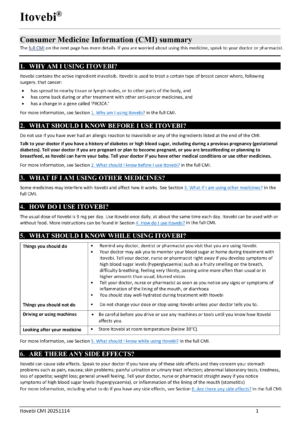
Consumer Medicine Information link
DOWNLOAD

ITOVEBI® (inavolisib), 3mg or 9mg film coated tablet, is a Prescription Medicine used for hormone receptor (HR)-positive, human epidermal growth factor receptor 2 (HER2)-negative breast cancer, where, following surgery, it has:
• spread to nearby tissue or lymph nodes (locally advanced), or to other parts of the body (metastatic), and
• come back during or after treatment with other anti-cancer medicines, and
• a change in a gene called ‘PIK3CA.’

Ask your doctor if ITOVEBI is right for you

ITOVEBI is an unfunded medicine. Ask your health professional about the cost of the medicine and other fees that may apply.

Use only as directed. If symptoms continue or you have side effects, see your healthcare professional. For more information about ITOVEBI:
• talk to your health professional; or
• visit www.medsafe.govt.nz for ITOVEBI Consumer Medicine Information; or
• visit www.roche.co.nz or www.cancertreatments.co.nz or call Roche on 0800 276 243.

ITOVEBI has risks and benefits.

Possible common side effects include: Stomach problems: stomach pain, nausea (feeling sick), vomiting; Mouth problems: inflammation of the lining of the mouth (pain, redness, swelling or mouth ulcers), disturbed sense of taste; Eye problems: dry eye; Skin problems: rash, dry skin, pale skin, unusual bruising or bleeding; Urinary problems: Pain when weeing (urinating); General: high blood sugar, tiredness, headache, loss of appetite, weight loss, hair thinning or hair loss, general unwell feeling, diarrhoea (liquid or watery poo, often with tummy pain and gas).

Do not use ITOVEBI if: you are allergic to inavolisib or any of the other ingredients in this medicine, or if you are pregnant or you are breastfeeding. Do not take this medicine after the expiry date printed on the pack or if the packaging is torn or shows signs of tampering.

Tell your doctor if you have a history of diabetes or high blood sugar, including during a previous pregnancy (gestational diabetes). Tell your doctor if you are pregnant or plan to become pregnant, or you are breastfeeding or planning to breastfeed, as ITOVEBI can harm your baby. Tell your doctor if you have other medical conditions or use other medicines.

Tell your doctor immediately or go to your nearest Accident and Emergency Centre if you notice any of the following: symptoms of high blood sugar levels (hyperglycaemia) such as finding it hard to breathe, nausea (feeling sick) and vomiting (being sick) which lasts more than 2 hours, stomach pain, feeling very thirsty or dry mouth, weeing more often than usual or passing greater amounts of urine than usual, blurred vision, unusually increased appetite, weight loss, fruity-smelling breath, flushed face and dry skin, feeling unusually sleepy or tired; symptoms of Inflammation of the lining of the mouth (stomatitis)  such as pain, redness, swelling  or ulcers; symptoms of diarrhoea such as loose or watery poo, tummy pain and gas.

Panel dated 13 April 2026. All trademarks mentioned herein are protected by law. Roche Products (New Zealand) Limited, Auckland.